


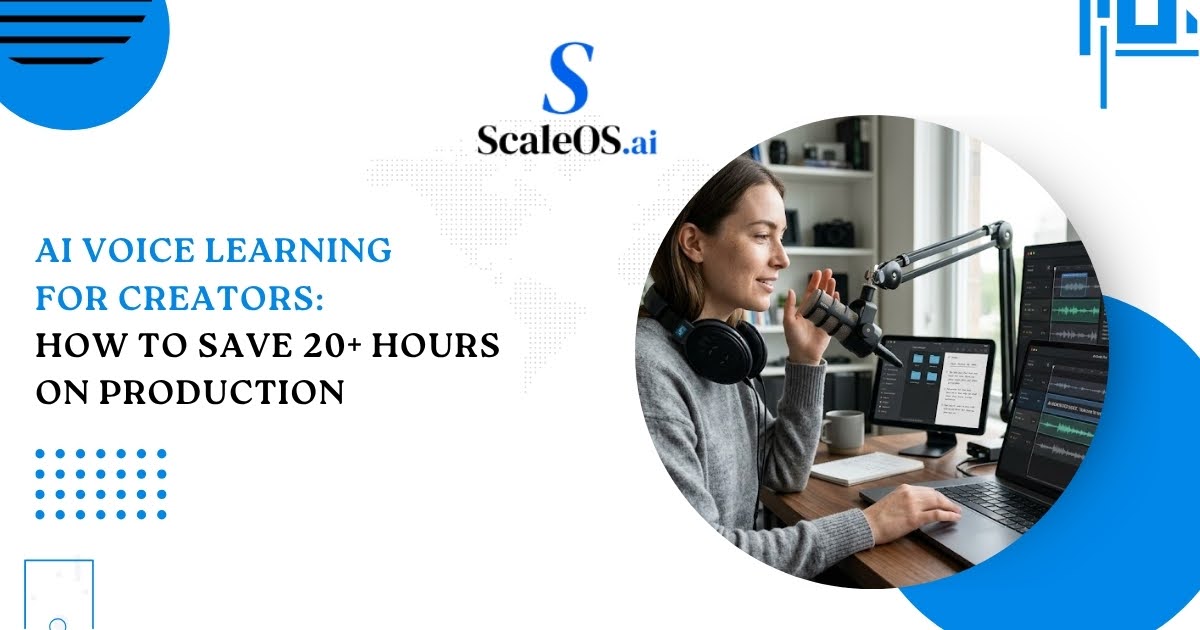
AI Voice Learning: Boost Your Creator Workflow by 20 Hours
AI voice learning is a technology that lets computers study and copy the unique sounds of a human voice. For creators, this means you can generate high-quality audio for videos, podcasts, or ads without ever picking up a microphone. By using deep learning algorithms, these systems can now clone a voice from just a few sentences. This shift saves creators over 20 hours a week by removing the need for manual recording, editing, and costly retakes.
Introduction
I’ve spent most of my life writing and creating content. If there’s one thing I’ve learned, it’s that your voice is your most valuable asset. But let’s be honest: recording that voice is a total drag. Think about the last time you sat down to record a script. You probably stumbled over a word, the neighbor started mowing their lawn, or you realized halfway through that you sounded a bit "off."
By the time you finish recording and editing, hours have vanished. That’s why AI voice learning is such a game-changer. We aren't just talking about robotic voices from ten years ago. We’re talking about technology that sounds exactly like you, minus the dry throat and the background noise.
In this guide, I’ll show you how to get those 20+ hours back every single week. We’ll look at the tech behind it, why it’s better for your business, and how you can use it to scale your reach without burning out.
How Can a Computer Learn My Voice?
You might be asking, "How does an AI learn my voice?" It sounds like science fiction, but it’s actually about something called acoustic pattern recognition. Think of it like a fingerprint, but for your throat. Every time you speak, you have a specific rhythm, pitch, and way of pronouncing vowels.
Modern voice models AI uses deep learning to map these patterns. It used to take hours of audio to train a model. Now? Some systems can handle AI learns voice from 2 sentences. It’s incredibly fast. The system listens to those two sentences, picks up your unique "vibe," and creates a digital clone.
Once the machine has your "voice print," you can just type out a script, and the AI speaks it. It’s that simple. This is the AI machine learning role in modern voice picking technology; it picks the best parts of your speech and replicates them perfectly.
Saving 20 Hours: Where the Time Goes
Let’s do some quick math. If you’re a creator making one 10-minute video a week, here is what your schedule usually looks like:
Setup: 30 minutes (lights, mic, quiet room).
Recording: 60 minutes (retakes, stumbles).
Editing: 120 minutes (cutting out "ums," "ahs," and silences).
Fixing Errors: 60 minutes (re-recording lines you messed up).
That is nearly five hours for just one short video. Now, imagine you’re doing this for multiple platforms or long-form podcasts. It adds up fast.
With AI voice learning, your workflow changes to this:
Write Script: 30 minutes.
Generate Audio: 2 minutes.
Review: 10 minutes.
Suddenly, you’ve saved hours on a single project. When you scale this across social media, ads, and internal team training, you’re easily saving 20+ hours a month, if not a week. You’re no longer a "recorder"; you’re a director.
The Sounds of AI: Moving Beyond the Robot
We’ve all heard those "sounds of AI" that make us want to hit the mute button. They sound flat and boring. However, the newest AI voice agents with AI/machine learning are different. They use sentiment analysis to understand how a sentence should be said.
If you write a script about a sad topic, the AI knows to slow down and lower the pitch. If you’re talking about a big sale, it adds excitement. This is crucial for creators who need to keep their audience engaged. Authoritative sources like DeepMind have been pushing the boundaries of how neural networks process these human emotions, making it harder to tell a human from a machine.
High-Value Business Applications
While creators love this for YouTube or TikTok, the real magic happens when you bring this into the business world. This is where ScaleOS shines.
1. The AI SDR (Sales Development Representative)
Imagine having a sales agent that never sleeps and always sounds like your best closer. By using AI voice learning, companies can create voice bots that handle outbound calls. These bots don't just read scripts; they listen. They recognize if a prospect is annoyed or interested and adjust their tone in real-time.
2. Hands-Free Operations
For leaders in Revenue Operations (RevOps), time is money. Using voice-powered tools allows for "hands-free" CRM updates. Instead of typing for hours after a meeting, you can just speak to your AI assistant, and it updates your records instantly.
3. Speechmatics Flow Agent Voices
There are so many options now, including the speechmatics flow agent voices number of voices. You aren't stuck with just one sound. You can have a whole team of different voices, each optimized for different regions or customer types.
Solving the "Accent" Problem (Especially in DACH)
One big hurdle for many AI tools is regional dialects. Most AI is trained on American English. If you’re in Germany, Switzerland, or Austria (the DACH region), you know that standard German sounds very different from local dialects.
This is a major pain point. Many tools fail because they can't handle a Swiss-German accent. However, advanced AI deep learning solutions are now being trained specifically on these gaps. At ScaleOS, we focus on ensuring that these nuances aren't lost. Your AI shouldn't just speak your language; it should speak your dialect.
Security and Privacy: Is My Voice Safe?
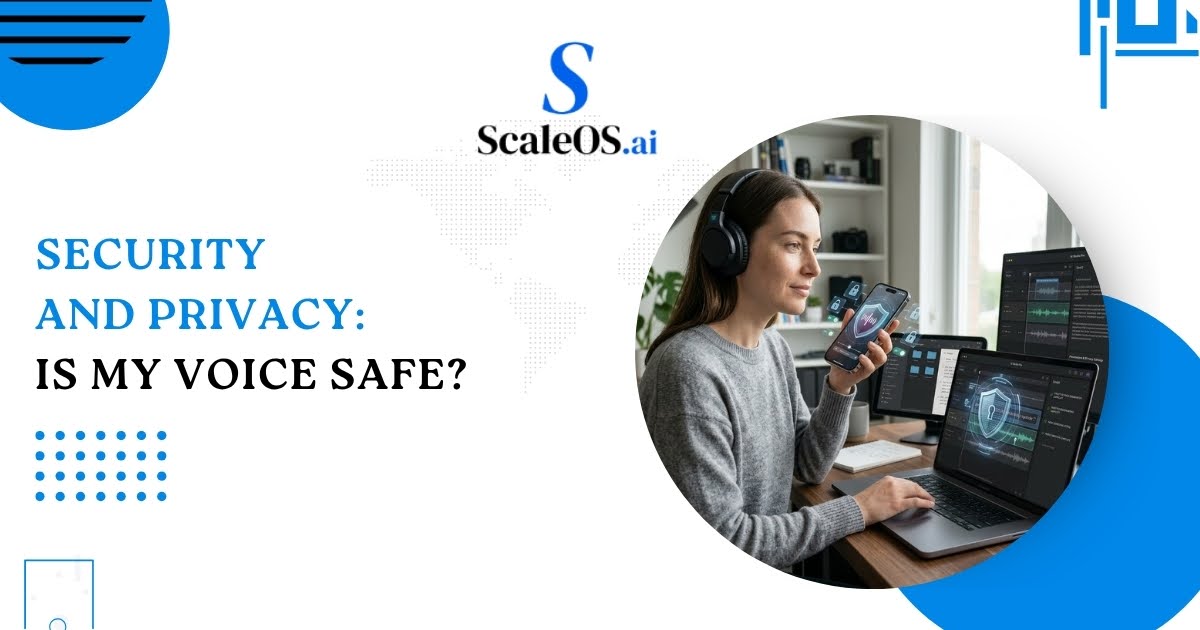
I get asked this all the time: "Can someone steal my voice?" It’s a valid fear. If an AI learn your voice from just a few clips, what’s stopping a scammer?
This is why choosing the right platform matters. You need the best AI deep learning solutions for voice fraud detection and strict privacy rules. According to GDPR.eu, personal data, including biometric data like your voice, must be protected with the highest standards.
When you use a professional service, your voice data is encrypted. It belongs to you. You aren't just uploading audio to the cloud; you’re building a secure asset for your brand.
The Future: Real-Time Translation
We are moving toward a world where you can record a video in English, and the AI will "learn" your voice and re-speak it in perfect Japanese or Spanish, all while keeping your unique tone. This removes every barrier to going global. You can reach a billion people without ever leaving your home office.
Conclusion: Why You Should Start Today
AI voice learning isn't a trend; it's the new standard for production. If you keep doing things the old way, you’re essentially choosing to waste 20 hours a week. That’s time you could spend with your family, brainstorming new ideas, or actually closing deals.
By embracing AI learn my voice technology, you’re giving yourself the gift of scale. You can produce more, reach further, and stay human, even when a machine is helping you out.
If you’re ready to stop recording and start growing, it’s time to see what modern AI can really do for your workflow. Don't let your competition get those 20 hours ahead of you.
Ready to automate your sales and production with the power of elite AI?
Visit ScaleOS today to see how we’re transforming the way creators and businesses communicate.
Frequently Asked Questions
What is an AI Voice Assistant?
An AI voice assistant is an advanced software agent using Natural Language Processing to understand and respond to spoken commands. Unlike basic bots, it analyzes intent and context to execute complex tasks, manage workflows, and provide human-like verbal interactions for businesses and creators.
How to Make an AI Voice Assistant?
To build one, integrate four key layers: an ASR engine for transcription, an LLM for reasoning, a TTS tool for vocal synthesis, and APIs to connect your business data. Orchestrate these using platforms like Vapi or Retell to create a seamless conversational flow.
How Do Digital Assistants Work?
Digital assistants function through a "Sense-Think-Act" loop. They capture audio via speech recognition, process the text through neural networks to identify user intent, and then trigger specific API actions—like booking meetings or updating CRMs—before delivering a synthesized, natural-sounding vocal response to the user.
What is a Virtual Voice Assistant?
A virtual voice assistant is an AI-powered productivity tool that manages tasks via voice. In professional settings, it handles high-value operations like lead qualification, meeting scheduling, and real-time transcription, allowing for hands-free business management and significantly reduced manual workloads for teams and creators.