



Voice Assistant Technology Boosting Operational Efficiency
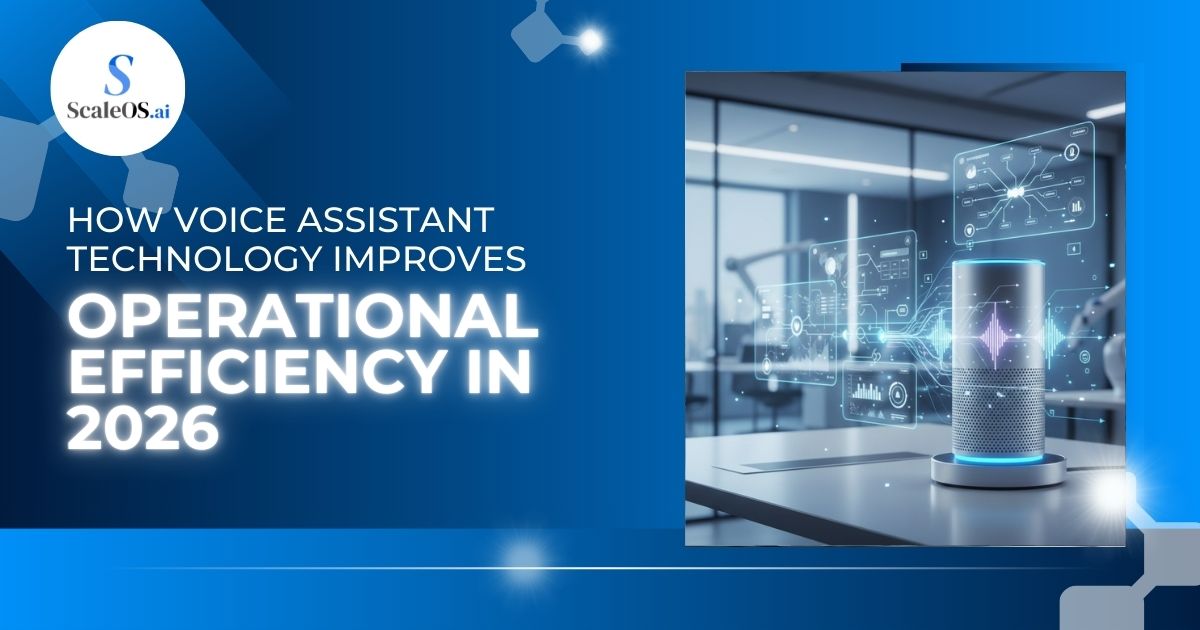
How Voice Assistant Technology Improves Operational Efficiency in 2026
In 2026, companies will increasingly adopt voice assistant technology to streamline operations and improve productivity. This technology helps teams complete tasks faster, reduces errors, and enhances overall efficiency. Enterprises leverage AI-powered tools to automate repetitive workflows and focus on high-value activities.
Using an AI-powered voice assistant, businesses can manage scheduling, meetings, reporting, and customer interactions more effectively. Employees save time and reduce mental load, allowing them to focus on strategy and innovation. Organizations adopting these systems often see measurable improvements in operational performance and resource allocation.
Moreover, voice assistants are evolving beyond simple task management. They can analyze real-time data, summarize information, and provide actionable insights to managers. This makes them indispensable tools in modern workplaces.
Key Benefits of Voice Assistant Technology in Business
Voice assistants are no longer limited to simple home devices. Modern AI voice assistants for enterprises now integrate with CRM, ERP, and project management platforms. This allows employees to access information and complete tasks through natural language commands.
The benefits of AI in workflow automation include faster task completion, higher accuracy, and reduced operational bottlenecks. Teams can standardize repetitive processes while maintaining compliance and precision. Automation also helps managers track productivity, detect issues early, and optimize resource allocation.
Additionally, companies using voice assistant tech gain a competitive edge. AI assistants can handle tasks such as generating reports, sending reminders, and monitoring team progress, ensuring that employees are focused on priorities that drive growth.
How AI Voice Assistant Enhances Customer Support
Customer support is one of the most important areas benefiting from AI. An AI customer service assistant can respond to client inquiries instantly, reducing response times and improving customer satisfaction. These assistants handle repetitive questions, while human agents focus on complex issues.
By leveraging an AI virtual assistant for customer service, organizations can provide 24/7 support without additional staffing. Automated customer interactions ensure consistent messaging and accurate information delivery. Companies can also track interactions to identify pain points and improve future customer experiences.
Voice assistant technology also helps in integrating multiple support channels. Businesses can manage emails, live chats, and phone calls through a single AI platform, making customer support more seamless and efficient.
AI-Driven Process Optimization Across Departments
AI-driven process optimization improves efficiency in marketing, sales, operations, and HR departments. For example, marketing teams can schedule campaigns automatically, sales teams can access CRM data verbally, and operations teams can monitor inventory in real time.
AI automation in business includes automated report generation, task assignment, and data entry. Employees spend less time on manual tasks, and teams can allocate more resources to strategic initiatives. AI assistants can also detect inefficiencies in workflows, recommending improvements for better operational performance.
With artificial intelligence voice assistant technology, employees can quickly retrieve information without switching between multiple software platforms. This boosts collaboration and reduces delays in decision-making.
Operational Efficiency Gains with Voice Agent Technology
The impact of AI on business efficiency is evident in faster task execution, reduced downtime, and better resource utilization. Voice assistants handle scheduling, reminders, and document management without human intervention.
Using artificial intelligence voice assistant tools, managers can delegate repetitive administrative work. Employees focus on value-added tasks such as strategy, client relations, and project development. Organizations using these systems notice quicker decision-making, fewer errors, and improved performance metrics.
Additionally, efficiency gains extend to cross-functional projects. Voice assistants can coordinate between departments, send alerts for deadlines, and provide real-time updates on progress. This ensures smoother operations across the organization.
Integrating Voice Agent Technology into Existing Systems
To maximize the value of AI voice agent technology, integration with existing software is crucial. AI assistants can connect to CRM, ERP, project management, and communication platforms, creating a seamless workflow.
Businesses using AI voice agents for enterprises experience reduced workflow interruptions. Employees can request information, assign tasks, and track progress verbally. Integration allows managers to have a centralized view of operations, helping them make informed decisions.
Furthermore, AI integration allows predictive insights. For instance, the assistant can forecast task delays, recommend adjustments, and provide alerts to prevent operational bottlenecks. This makes workflow optimization more proactive rather than reactive.
Real-World Examples of AI Automation in Business
Companies across industries have successfully implemented AI automation in business. Sales teams schedule client calls, generate follow-up emails, and track pipelines automatically. Operations teams monitor inventory, manage logistics, and optimize delivery routes.
Marketing teams leverage AI-powered process optimization to track campaigns, adjust ad budgets, and measure ROI without manual intervention. HR departments automate onboarding, leave requests, and employee queries, reducing administrative overhead.
These examples demonstrate how an AI voice agent technology transforms everyday operations. Employees can focus on innovation, creativity, and strategy, while AI handles routine work reliably and consistently.
Boosting Productivity and Reducing Human Error
One key advantage of voice agent technology is minimizing human error. Automated systems handle repetitive tasks with accuracy. Employees no longer need to double-check data entry or manually track tasks. An AI virtual assistant for customer service ensures consistent, accurate communication.
By automating standard queries, businesses can maintain high-quality interactions and improve satisfaction. Employees can spend more time on tasks that generate value and improve business outcomes. Moreover, AI assistants provide reminders, error alerts, and predictive insights. This reduces the risk of missed deadlines or operational mistakes, keeping projects on track.
Enhancing Decision-Making with AI Insights
AI-powered voice assistants can provide real-time analytics and actionable insights. Managers can ask questions verbally and receive instant, accurate answers. This supports faster decision-making and more agile operations. The impact of AI on business efficiency is particularly significant for large enterprises.
Organizations can monitor performance trends, identify inefficiencies, and implement corrective actions rapidly. Predictive insights help in allocating resources wisely and planning future operations. An AI voice agent technology can also assist with financial monitoring, project tracking, and customer analytics, creating an informed and data-driven management approach.
Cost Savings Through Automation
Investing in an AI customer service assistant and other AI solutions reduces operational costs. Companies can manage higher volumes of tasks without additional hires, while minimizing errors. Combined with the benefits of AI in workflow automation, businesses achieve better ROI.
Automation reduces overtime, prevents costly mistakes, and accelerates task completion. Over time, AI-driven operations deliver measurable savings and increased efficiency. Additionally, predictive analytics from AI assistants helps in resource planning, ensuring budget allocation aligns with actual operational needs.
Preparing for the Future of Work
Adopting voice agent technology prepares organizations for an AI-driven future. Teams can collaborate efficiently across departments, regardless of location. Automated customer interactions ensure clients receive fast, reliable support around the clock. Employees can concentrate on innovation, strategy, and growth initiatives.
Companies embracing AI today position themselves as leaders in operational efficiency for 2026 and beyond. This approach also ensures business continuity in hybrid or remote work environments. AI assistants maintain workflow consistency, reducing disruption and improving employee satisfaction.
Best Practices for Implementing AI-Powered Voice Assistant
Identify high-volume repetitive tasks suitable for automation.
Train employees to interact effectively with AI tools.
Integrate voice assistants with business software for seamless operations.
Monitor KPIs to assess efficiency improvements.
Continuously refine workflows to maximize AI insights.
Following these practices ensures maximum benefit from voice assistant tech while minimizing adoption challenges. Companies see measurable improvements in efficiency, productivity, and employee satisfaction.
Conclusion
Voice assistant technology is a strategic advantage for enterprises in 2026. It improves operational efficiency, reduces errors, and increases productivity across all departments. By adopting AI-driven tools, organizations can automate repetitive tasks, streamline workflows, and deliver consistent, high-quality customer service. Enterprises that integrate these technologies gain measurable improvements in performance, employee satisfaction, and cost savings.