



Marketing Automation Tools & AI Strategies for 2026 | ScaleOS
In the modern B2B landscape, "busy" is the enemy of "growth." Most founders and sales leaders spend 80% of their day trapped in manual labor, prospecting, cleaning CRM data, and sending follow-up emails. According to research by Ascend2, the top goals for marketers using automation are to optimize strategy (43%) and improve data quality (37%).
This "old way" of working creates a ceiling on your revenue. Marketing automation is the solution to breaking that ceiling. In the era of AI, it is about building an intelligent engine that identifies, engages, and converts leads while you sleep.
What is Marketing Automation?
Marketing automation is the use of software and technology to streamline, scale, and optimize marketing activities. For a B2B agency or service provider, this means your marketing automation platform acts as a digital SDR.
It typically covers tasks like email campaigns, customer segmentation, and lead nurturing. As industry expert Cathal Melinn notes, automation isn't about taking jobs away; it’s about "re-angling" what marketers do to focus on higher-value strategy and creativity.
Why Automation is No Longer Optional
With marketing budgets tightening—flatlining at roughly 7.7% of company revenue—efficiency is your greatest competitive advantage. Building a marketing automation strategy offers several transformative benefits:
Improved Sales–Marketing Collaboration: Automated lead scoring ensures smooth handoffs, so sales teams only touch "ready-to-buy" prospects.
Time and Cost Savings: By eliminating repetitive work, your team can deliver more with a smaller budget.
Personalization at Scale: Use real-time behavior to deliver hyper-targeted content that reflects past preferences.
Brand Consistency: Ensure your tone and messaging remain identical across every channel, from LinkedIn to email.
The Core Types of Marketing Automation
To build a winning revenue engine, you must understand the different pillars of growth marketing automation.
1. Inbound Automation
This focuses on "warm" leads already interacting with your brand.
Visitor Identification: Know which companies browse your site before they fill out a form.
Behavioral Triggers: Send instant follow-ups based on specific whitepaper downloads or pricing page visits.
2. Outbound Automation
This is the "engine" room for modern B2B companies.
Automated Prospecting: Using AI to find decision-makers across global databases.
Hyper-Personalization: Generating messages that mention recent company news or specific pain points.
3. Sales and Marketing Automation
The biggest gap in most businesses is between marketing and sales. Sales Ai and marketing automation features close this gap, ensuring that no lead falls through the cracks and data remains clean across your CRM.

Artificial Intelligence is now the "brain" inside the best marketing automation tools. It has moved beyond simple "if-this-then-that" logic into predictive territory.
Workflow AI Assistant: Systems that suggest improvements to your outreach sequences based on real-time reply data.
Predictive Analytics: Identifying high-value prospects based on patterns that humans might miss.
Voice AI: Handling initial qualification calls or following up on missed demos with natural-sounding conversation.
Content Generation: Using models like ChatGPT or Claude to brainstorm and generate content that matches your specific brand voice.
Real-World Examples: Automation in Action
Even the world's biggest brands rely on automation to maintain their lead:
Airbnb: Uses automation to offer personalized recommendations based on search history and travel trends. They even use an AI-powered photo tour to automatically arrange host images by room.
Netflix: Over 80% of what people watch is driven by automated recommendations. They use AI to predict successful content and even automate subtitles and dubbing for global audiences.
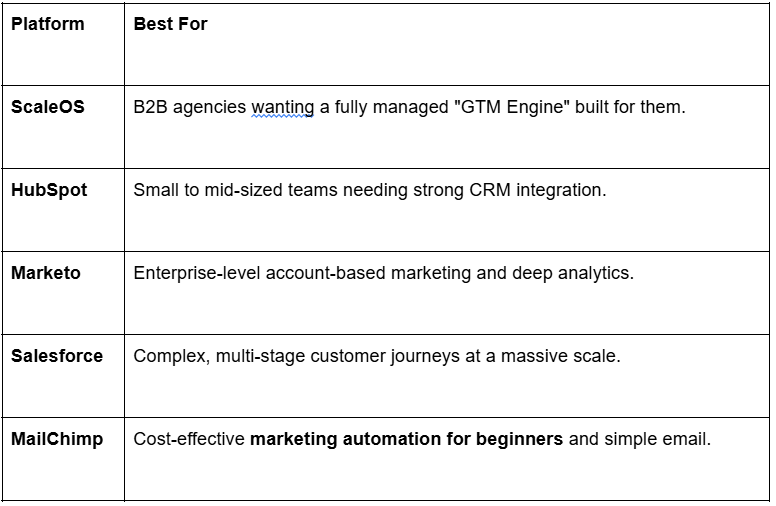
Top Marketing Automation Platforms to Consider
When you look to implement marketing automation, your choice of platform should reflect your scale and budget:
4 Steps Toward Effective Marketing Automation
Before you flip the switch, follow this workflow to ensure your automation yields the best results:
Identify the Right Tasks: Pinpoint the most time-consuming, repetitive activities (like cleaning data or manual prospecting).
Select the Right Platform: Ensure your chosen tools are compatible with your existing CRM to avoid "tool chaos."
Train Your Team: Automation requires a shift in mindset. Invest time in helping your staff understand how their roles will focus on strategy rather than admin.
Monitor and Optimize: Automation isn't "set it and forget it." Regularly review lead generation and conversion metrics to refine your workflows.
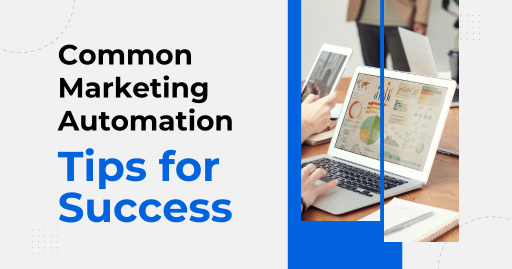
Common Marketing Automation Tips for Success
Keep it Human: Never let your automation sound like a robot. Use "Human-in-the-loop" systems for high-stakes outreach.
Clean Your Data: Automation thrives on quality. If your data is "dirty," you will simply be sending mistakes at a faster rate.
Focus on Value: Every automated touchpoint should provide value, not just a "quick ask" for a meeting.
Stop Working for Your Tools
Marketing automation is no longer a "nice to have", it is a core driver of performance. By moving away from "spaghetti marketing" and toward a unified revenue operating system, you reclaim your time and predictably scale your business. The goal is simple: Create a system where your revenue grows while your workload stays the same.
Are you really into stopping the manual grind?
At ScaleOS, we don't just give you a tool; we build the entire "AI GTM Engine" for you. Whether you need a managed service or a custom build-out, we help you scale without the headcount.
Book a Free Audit with ScaleOS Today & Let’s look under the hood of your sales process and find your biggest automation opportunities.
Frequently Asked Questions
What is marketing automation?
Software that streamlines repetitive tasks like prospecting and lead nurturing. It uses AI-driven workflows to engage prospects at scale, acting as a digital revenue engine that ensures consistent outreach and data management without manual labor.
How to implement marketing automation?
Audit manual bottlenecks, map your customer journey, and integrate a platform into your CRM. Start with one high-impact workflow, like automated follow-ups, then use real-time performance data to refine and scale your efforts.
What is marketing automation by ScaleOS, and why should I use it?
Unlike traditional software that you have to learn and manage yourself, ScaleOS is an AI-driven GTM (Go-To-Market) Engine. It is a "Business-in-a-Box" designed for B2B founders and agencies who want the output of a 10-person sales team without the overhead. You should use ScaleOS if you are tired of "tool chaos" and want a unified system that handles everything, from identifying anonymous website visitors to sending hyper-personalized outbound messages, all in your unique brand voice.
How does ScaleOS set up marketing automation?
ScaleOS takes a "Done-For-You" or "Done-With-You" approach to eliminate the steep learning curve of automation. We set up your system in three phases:
The Foundation: We integrate our AI engine into your existing tech stack (CRM, Email, LinkedIn) to ensure zero disruption.
The Engine Build: We create custom AI agents that handle your specific prospecting, content creation, and lead nurturing workflows.
The Scale Phase: We switch the system to "Always-On" mode, providing continuous optimization and data enrichment to ensure your pipeline stays full while you focus on high-level strategy.