


Sales force automation overview

How Sales Force Automation Software Helps Businesses Scale Faster

July 10, 20269 min read

Introduction

Every growing business reaches a point where sales become harder to manage.

Leads start coming in from different channels. Follow-ups get delayed. Sales reps spend more time updating spreadsheets than speaking with prospects. Opportunities slip through the cracks, not because the team lacks talent, but because manual processes cannot keep up with growth.

The result?

Lost revenue, inconsistent customer experiences, and a sales pipeline filled with uncertainty.

This is exactly where sales force automation and crm systems become game changers.

Modern businesses are no longer relying on manual tracking, sticky notes, and endless administrative work. Instead, they are using intelligent automation to capture leads, manage customer interactions, automate follow-ups, forecast revenue, and help sales teams focus on what they do best: closing deals.

At ScaleOS.ai, we help service businesses eliminate repetitive sales tasks through intelligent automation. Rather than adding more staff or introducing another disconnected tool, we install AI-powered systems that create faster workflows, stronger customer engagement, and predictable growth.

Let's explore what sales force automation is, why it matters, and how it can transform the way your business sells.

What Is Sales Force Automation?

If you've ever wondered what Salesforce automation is, the answer is simple.

Sales Force Automation (SFA) refers to software and systems designed to automate repetitive sales activities throughout the customer journey.

Instead of manually entering customer information, scheduling follow-ups, tracking leads, or generating reports, an SFA platform handles these processes automatically.

A modern sales force automation tool typically manages:

  • Lead capture and qualification

  • Contact management

  • Opportunity tracking

  • Sales pipeline management

  • Task automation

  • Appointment scheduling

  • Follow-up sequences

  • Sales forecasting

  • Performance reporting

The goal is not to replace salespeople.

The goal is to remove administrative work so sales teams can spend more time building relationships and closing deals.

Think of it as giving every salesperson a digital assistant that works 24/7 without missing a single task.

The Relationship Between Sales Force Automation and CRM

Many business owners confuse CRM systems with sales automation.

While they work together, they serve different purposes.

A CRM focuses on managing customer relationships and storing customer information.

A sales force automation and crm system takes things further by actively automating actions inside the sales process.

For example:

A CRM stores customer data.

Sales automation uses that data to:

  • Trigger follow-up emails

  • Schedule reminders

  • Move leads through pipelines

  • Assign tasks automatically

  • Generate forecasts

  • Track sales activities

This is why the most successful businesses combine CRM functionality with automation capabilities.

Instead of simply collecting information, they use that information to drive revenue-producing actions automatically.

Why Sales Force Automation Matters More Than Ever

Buyer behavior has changed dramatically.

Customers expect fast responses.

They expect personalized communication.

They expect businesses to remember previous interactions.

Unfortunately, manual sales processes struggle to meet these expectations.

Research consistently shows that lead response time directly impacts conversion rates. The longer a business waits to respond, the less likely a prospect is to buy.

This is where sales force automation solutions provide a competitive advantage.

Automation ensures that:

  • Leads receive immediate attention

  • Follow-ups happen consistently

  • Opportunities are never forgotten

  • Customer interactions remain personalized

  • Sales teams stay focused on revenue-generating activities

The businesses winning today are not necessarily the ones with the biggest teams.

They are the ones with the smartest systems.

How the Sales Force Automation Process Works
Introduction Every growing business reaches a point where sales become harder to manage. Leads start coming in from different channels. Follow-ups get delayed. Sales reps spend more time updating spreadsheets than speaking with prospects. Opportunities slip through the cracks, not because the team lacks talent, but because manual processes cannot keep up with growth. The result? Lost revenue, inconsistent customer experiences, and a sales pipeline filled with uncertainty. This is exactly where sales force automation and crm systems become game changers. Modern businesses are no longer relying on manual tracking, sticky notes, and endless administrative work. Instead, they are using intelligent automation to capture leads, manage customer interactions, automate follow-ups, forecast revenue, and help sales teams focus on what they do best: closing deals. At ScaleOS.ai, we help service businesses eliminate repetitive sales tasks through intelligent automation. Rather than adding more staff or introducing another disconnected tool, we install AI-powered systems that create faster workflows, stronger customer engagement, and predictable growth. Let's explore what sales force automation is, why it matters, and how it can transform the way your business sells.  What Is Sales Force Automation? Alt Text Image: Sales force automation overview   If you've ever wondered what Salesforce automation is, the answer is simple. Sales Force Automation (SFA) refers to software and systems designed to automate repetitive sales activities throughout the customer journey. Instead of manually entering customer information, scheduling follow-ups, tracking leads, or generating reports, an SFA platform handles these processes automatically. A modern sales force automation tool typically manages: Lead capture and qualification Contact management Opportunity tracking Sales pipeline management Task automation Appointment scheduling Follow-up sequences Sales forecasting Performance reporting The goal is not to replace salespeople. The goal is to remove administrative work so sales teams can spend more time building relationships and closing deals. Think of it as giving every salesperson a digital assistant that works 24/7 without missing a single task.  The Relationship Between Sales Force Automation and CRM Many business owners confuse CRM systems with sales automation. While they work together, they serve different purposes. A CRM focuses on managing customer relationships and storing customer information. A sales force automation and crm system takes things further by actively automating actions inside the sales process. For example: A CRM stores customer data. Sales automation uses that data to: Trigger follow-up emails Schedule reminders Move leads through pipelines Assign tasks automatically Generate forecasts Track sales activities This is why the most successful businesses combine CRM functionality with automation capabilities. Instead of simply collecting information, they use that information to drive revenue-producing actions automatically.  Why Sales Force Automation Matters More Than Ever Buyer behavior has changed dramatically. Customers expect fast responses. They expect personalized communication. They expect businesses to remember previous interactions. Unfortunately, manual sales processes struggle to meet these expectations. Research consistently shows that lead response time directly impacts conversion rates. The longer a business waits to respond, the less likely a prospect is to buy. This is where sales force automation solutions provide a competitive advantage. Automation ensures that: Leads receive immediate attention Follow-ups happen consistently Opportunities are never forgotten Customer interactions remain personalized Sales teams stay focused on revenue-generating activities The businesses winning today are not necessarily the ones with the biggest teams. They are the ones with the smartest systems.  How the Sales Force Automation Process Works Alt text image: How the sales force automation process works   Understanding the sales force automation process helps businesses identify where automation creates the biggest impact. A typical automated sales workflow looks like this: Lead Capture A prospect fills out a form, calls your business, books an appointment, or interacts with an advertisement. Instead of manually collecting information, the system automatically records and organizes the lead. Lead Qualification The platform evaluates lead quality based on predefined criteria. High-intent prospects can immediately be assigned to a sales representative. Automated Follow-Ups Emails, SMS messages, reminders, and appointment confirmations are triggered automatically. This ensures every lead receives timely communication. Pipeline Management As prospects move through the buying journey, the system updates deal stages automatically. Sales managers gain complete visibility into pipeline performance. Reporting and Forecasting Real-time analytics help businesses track performance and forecast future revenue with greater accuracy. The entire process becomes faster, more predictable, and easier to scale.  Key Sales Force Automation Advantages The biggest reason businesses invest in automation is results. The most important sales force automation advantages include: Increased Productivity Sales representatives spend less time on administrative tasks and more time selling. Instead of manually updating records, sending reminders, or preparing reports, automation handles those responsibilities automatically. Faster Lead Response Times The first company to engage a prospect often has the greatest chance of winning the business. Automation helps businesses respond within minutes instead of hours. Improved Customer Experience Customers receive faster, more relevant communication throughout their buying journey. This creates trust and improves conversion rates. Better Sales Visibility Leaders gain complete visibility into performance metrics, pipeline health, and revenue forecasts. Decisions become data-driven rather than based on assumptions. Reduced Human Error Manual processes create mistakes. Automation creates consistency. No more forgotten follow-ups, misplaced notes, or incomplete records. Greater Revenue Growth When every lead receives consistent attention and every opportunity is tracked properly, businesses naturally increase conversions and revenue.  How Sales Force Automation Increases Sales Productivity One of the most common questions businesses ask is: How does sales force automation increase sales productivity? The answer comes down to time. Most sales professionals spend a significant portion of their day on non-selling activities. These include: Data entry Reporting Scheduling Follow-up management Pipeline updates Automation removes these repetitive tasks. Instead of spending hours organizing information, sales teams can focus on: Building relationships Conducting discovery calls Presenting solutions Negotiating deals Closing sales At ScaleOS.ai, we regularly see businesses recover dozens of productive hours every month simply by automating routine sales operations. Those recovered hours directly contribute to increased revenue generation.  Why Small Businesses Need Sales Force Automation A common misconception is that automation is only for large enterprises. The reality is that sales force automation for small businesses can often deliver even greater value. Small businesses typically operate with limited resources. Every missed lead matters. Every delayed response impacts revenue. Every inefficient process reduces profitability. Automation helps small teams compete with larger organizations by creating systems that operate around the clock. With the right automation framework, a small business can: Respond instantly to inquiries Manage hundreds of leads simultaneously Track every customer interaction Automate appointment scheduling Maintain consistent follow-up sequences This creates enterprise-level efficiency without enterprise-level costs.  Sales Force Automation Implementation Best Practices Successful sales force automation implementation requires more than simply purchasing software. Businesses should start by identifying repetitive tasks that consume the most time. These often include: Lead assignment Follow-up scheduling Data entry Customer communication Reporting Next, companies should establish clear automation goals. For example: Reduce response times Improve lead conversion rates Increase sales productivity Enhance customer experiences The most successful implementations also focus on team adoption. Technology only creates value when people actually use it. This is why ScaleOS.ai emphasizes strategy, training, and workflow optimization alongside automation deployment. The goal is not just implementation. The goal is transformation.  Choosing the Right Sales Force Automation Solutions Not all automation platforms are created equally. The best sales force automation solutions combine automation, CRM functionality, analytics, and AI-powered insights into a unified ecosystem. When evaluating platforms, businesses should consider: Ease of Use Complex systems often create adoption challenges. Choose solutions that simplify workflows. Integration Capabilities Your automation platform should connect with marketing tools, calendars, communication systems, and CRM platforms. AI Features Modern automation increasingly relies on AI for forecasting, lead scoring, and customer engagement. Scalability Choose a platform that can grow alongside your business. The right solution should support future expansion without requiring a complete rebuild.  How Modern Sales Force Automation Companies Are Using AI Today's leading sales force automation companies are moving beyond traditional workflow automation. Artificial intelligence is becoming a core component of sales operations. AI-powered automation can: Predict buying behavior Prioritize high-intent leads Recommend next-best actions Generate intelligent follow-ups Forecast revenue more accurately At ScaleOS.ai, AI operators handle customer interactions, qualify leads, schedule appointments, and support sales processes around the clock. Rather than replacing human expertise, AI enhances productivity and allows teams to focus on high-value conversations. This combination of human insight and intelligent automation creates a powerful growth engine for modern businesses.  How Sales Force Automation Software Improves Sales Team Productivity Another frequently asked question is: How does sales force automation software improve sales team productivity? The answer lies in workflow efficiency. When every sales activity is organized within a centralized system, teams gain: Better visibility Faster communication Stronger collaboration Improved accountability Higher conversion rates Sales leaders can quickly identify bottlenecks, monitor performance, and optimize strategies. Reps spend less time managing tasks and more time creating revenue. The result is a sales organization that operates with greater speed, consistency, and confidence.  The Future of Sales Is Automated Businesses that continue relying on manual sales processes will face increasing challenges. Customer expectations are rising. Competition is intensifying. Response speed matters more than ever. Automation is no longer a luxury. It is becoming a necessity. Organizations that embrace sales force automation and crm systems gain a significant advantage through faster workflows, better customer experiences, stronger forecasting, and increased revenue growth. The future belongs to businesses that combine human expertise with intelligent automation.  Stop Managing Sales. Start Scaling Revenue. Your sales team should spend time closing deals, not chasing spreadsheets, updating records, or managing repetitive tasks. ScaleOS.ai installs intelligent AI operators that answer calls, qualify leads, schedule appointments, automate follow-ups, and keep your pipeline moving 24/7. Instead of adding more staff or juggling disconnected software, you get one streamlined system designed to recover missed revenue and accelerate growth. Book Your AI Growth Assessment Today and discover how ScaleOS.ai can help you build a smarter sales engine that works around the clock.  Frequently Asked Questions What is Salesforce automation? Sales force automation is software that automates repetitive sales activities such as lead tracking, follow-ups, task management, pipeline monitoring, and reporting, allowing sales teams to focus on closing more deals. What is sales force automation software? Sales force automation software is a digital platform that helps businesses automate sales workflows, manage customer interactions, improve productivity, and increase revenue through intelligent process automation. How does sales force automation increase sales productivity? Sales force automation increases productivity by eliminating administrative tasks, reducing manual work, improving response times, automating follow-ups, and helping sales representatives spend more time engaging with prospects. How does sales force automation software improve sales team productivity? Sales automation software improves productivity by centralizing customer data, automating workflows, improving collaboration, enhancing visibility into sales pipelines, and enabling teams to make faster, data-driven decisions. Is sales force automation only for large businesses? No. Sales force automation for small businesses is often even more valuable because it allows smaller teams to compete effectively, automate repetitive tasks, and scale operations without significantly increasing costs. What are the biggest sales force automation advantages? The major sales force automation advantages include improved productivity, faster lead response times, better forecasting, enhanced customer experiences, reduced errors, stronger sales visibility, and increased revenue growth.

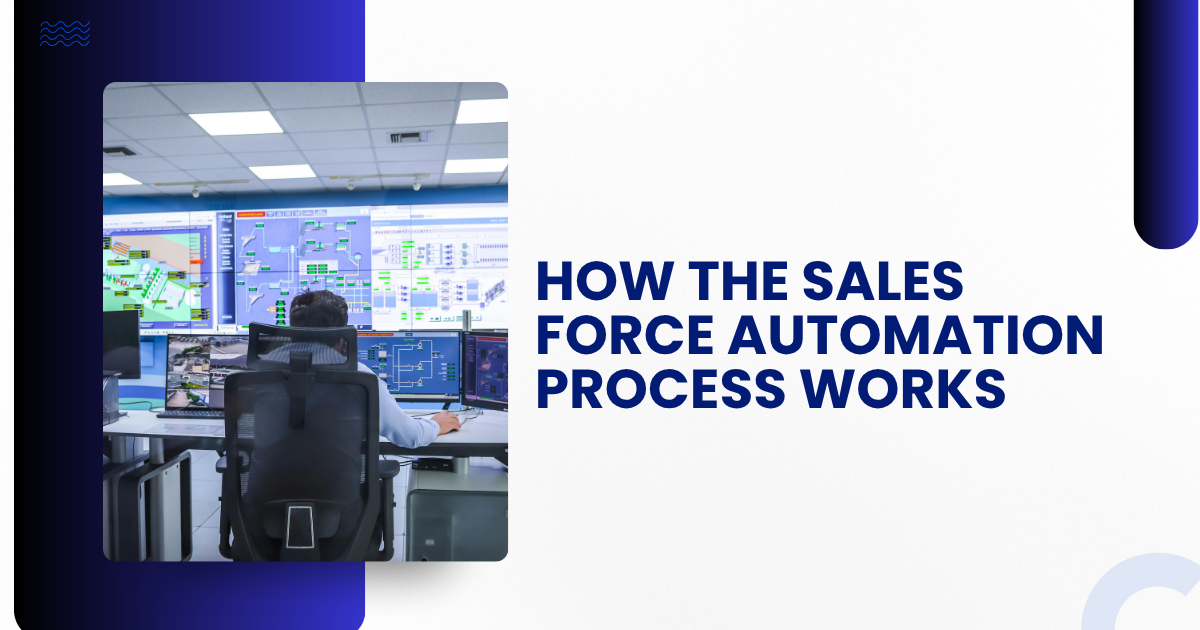
Understanding the sales force automation process helps businesses identify where automation creates the biggest impact.

A typical automated sales workflow looks like this:

Lead Capture

A prospect fills out a form, calls your business, books an appointment, or interacts with an advertisement.

Instead of manually collecting information, the system automatically records and organizes the lead.

Lead Qualification

The platform evaluates lead quality based on predefined criteria.

High-intent prospects can immediately be assigned to a sales representative.

Automated Follow-Ups

Emails, SMS messages, reminders, and appointment confirmations are triggered automatically.

This ensures every lead receives timely communication.

Pipeline Management

As prospects move through the buying journey, the system updates deal stages automatically.

Sales managers gain complete visibility into pipeline performance.

Reporting and Forecasting

Real-time analytics help businesses track performance and forecast future revenue with greater accuracy.

The entire process becomes faster, more predictable, and easier to scale.

Key Sales Force Automation Advantages

The biggest reason businesses invest in automation is results.

The most important sales force automation advantages include:

Increased Productivity

Sales representatives spend less time on administrative tasks and more time selling.

Instead of manually updating records, sending reminders, or preparing reports, automation handles those responsibilities automatically.

Faster Lead Response Times

The first company to engage a prospect often has the greatest chance of winning the business.

Automation helps businesses respond within minutes instead of hours.

Improved Customer Experience

Customers receive faster, more relevant communication throughout their buying journey.

This creates trust and improves conversion rates.

Better Sales Visibility

Leaders gain complete visibility into performance metrics, pipeline health, and revenue forecasts.

Decisions become data-driven rather than based on assumptions.

Reduced Human Error

Manual processes create mistakes.

Automation creates consistency.

No more forgotten follow-ups, misplaced notes, or incomplete records.

Greater Revenue Growth

When every lead receives consistent attention and every opportunity is tracked properly, businesses naturally increase conversions and revenue.

How Sales Force Automation Increases Sales Productivity

One of the most common questions businesses ask is:

How does sales force automation increase sales productivity?

The answer comes down to time.

Most sales professionals spend a significant portion of their day on non-selling activities.

These include:

  • Data entry

  • Reporting

  • Scheduling

  • Follow-up management

  • Pipeline updates

Automation removes these repetitive tasks.

Instead of spending hours organizing information, sales teams can focus on:

  • Building relationships

  • Conducting discovery calls

  • Presenting solutions

  • Negotiating deals

  • Closing sales

At ScaleOS.ai, we regularly see businesses recover dozens of productive hours every month simply by automating routine sales operations.

Those recovered hours directly contribute to increased revenue generation.

Why Small Businesses Need Sales Force Automation

A common misconception is that automation is only for large enterprises.

The reality is that sales force automation for small businesses can often deliver even greater value.

Small businesses typically operate with limited resources.

Every missed lead matters.

Every delayed response impacts revenue.

Every inefficient process reduces profitability.

Automation helps small teams compete with larger organizations by creating systems that operate around the clock.

With the right automation framework, a small business can:

  • Respond instantly to inquiries

  • Manage hundreds of leads simultaneously

  • Track every customer interaction

  • Automate appointment scheduling

  • Maintain consistent follow-up sequences

This creates enterprise-level efficiency without enterprise-level costs.


Sales Force Automation Implementation Best Practices

Successful sales force automation implementation requires more than simply purchasing software.

Businesses should start by identifying repetitive tasks that consume the most time.

These often include:

  • Lead assignment

  • Follow-up scheduling

  • Data entry

  • Customer communication

  • Reporting

Next, companies should establish clear automation goals.

For example:

  • Reduce response times

  • Improve lead conversion rates

  • Increase sales productivity

  • Enhance customer experiences

The most successful implementations also focus on team adoption.

Technology only creates value when people actually use it.

This is why ScaleOS.ai emphasizes strategy, training, and workflow optimization alongside automation deployment.

The goal is not just implementation.

The goal is transformation.

Choosing the Right Sales Force Automation Solutions

Not all automation platforms are created equally.

The best sales force automation solutions combine automation, CRM functionality, analytics, and AI-powered insights into a unified ecosystem.

When evaluating platforms, businesses should consider:

Ease of Use

Complex systems often create adoption challenges.

Choose solutions that simplify workflows.

Integration Capabilities

Your automation platform should connect with marketing tools, calendars, communication systems, and CRM platforms.

AI Features

Modern automation increasingly relies on AI for forecasting, lead scoring, and customer engagement.

Scalability

Choose a platform that can grow alongside your business.

The right solution should support future expansion without requiring a complete rebuild.

How Modern Sales Force Automation Companies Are Using AI

Today's leading sales force automation companies are moving beyond traditional workflow automation.

Artificial intelligence is becoming a core component of sales operations.

AI-powered automation can:

  • Predict buying behavior

  • Prioritize high-intent leads

  • Recommend next-best actions

  • Generate intelligent follow-ups

  • Forecast revenue more accurately

At ScaleOS.ai, AI operators handle customer interactions, qualify leads, schedule appointments, and support sales processes around the clock.

Rather than replacing human expertise, AI enhances productivity and allows teams to focus on high-value conversations.

This combination of human insight and intelligent automation creates a powerful growth engine for modern businesses.

How Sales Force Automation Software Improves Sales Team Productivity

Another frequently asked question is:

How does sales force automation software improve sales team productivity?

The answer lies in workflow efficiency.

When every sales activity is organized within a centralized system, teams gain:

  • Better visibility

  • Faster communication

  • Stronger collaboration

  • Improved accountability

  • Higher conversion rates

Sales leaders can quickly identify bottlenecks, monitor performance, and optimize strategies.

Reps spend less time managing tasks and more time creating revenue.

The result is a sales organization that operates with greater speed, consistency, and confidence.

The Future of Sales Is Automated

Businesses that continue relying on manual sales processes will face increasing challenges.

Customer expectations are rising.

Competition is intensifying.

Response speed matters more than ever.

Automation is no longer a luxury.

It is becoming a necessity.

Organizations that embrace sales force automation and crm systems gain a significant advantage through faster workflows, better customer experiences, stronger forecasting, and increased revenue growth.

The future belongs to businesses that combine human expertise with intelligent automation.

Stop Managing Sales. Start Scaling Revenue.

Your sales team should spend time closing deals, not chasing spreadsheets, updating records, or managing repetitive tasks.

ScaleOS.ai installs intelligent AI operators that answer calls, qualify leads, schedule appointments, automate follow-ups, and keep your pipeline moving 24/7.

Instead of adding more staff or juggling disconnected software, you get one streamlined system designed to recover missed revenue and accelerate growth.

Book Your AI Growth Assessment Today and discover how ScaleOS.ai can help you build a smarter sales engine that works around the clock.

Frequently Asked Questions

What is Salesforce automation?

Sales force automation is software that automates repetitive sales activities such as lead tracking, follow-ups, task management, pipeline monitoring, and reporting, allowing sales teams to focus on closing more deals.

What is sales force automation software?

Sales force automation software is a digital platform that helps businesses automate sales workflows, manage customer interactions, improve productivity, and increase revenue through intelligent process automation.

How does sales force automation increase sales productivity?

Sales force automation increases productivity by eliminating administrative tasks, reducing manual work, improving response times, automating follow-ups, and helping sales representatives spend more time engaging with prospects.

How does sales force automation software improve sales team productivity?

Sales automation software improves productivity by centralizing customer data, automating workflows, improving collaboration, enhancing visibility into sales pipelines, and enabling teams to make faster, data-driven decisions.

Is sales force automation only for large businesses?

No. Sales force automation for small businesses is often even more valuable because it allows smaller teams to compete effectively, automate repetitive tasks, and scale operations without significantly increasing costs.

What are the biggest sales force automation advantages?

The major sales force automation advantages include improved productivity, faster lead response times, better forecasting, enhanced customer experiences, reduced errors, stronger sales visibility, and increased revenue growth.


Back to Blog

Reach Out

Let’s Build Something Great.

Get in touch with one of our experts today!

Brand Logo

Transform your operations, marketing, and sales with intelligent automation. Work less, scale faster, and achieve more with ScaleOS.ai.

Social Links

Social Media Icons

Follow Us

ScaleOS.ai HQ
701 Tillery St STE 12, #B140

Austin, Texas 78702

© 2025 ScaleOS.ai. All Rights Reserved.